The week before your period
The week before your period, explained. It was just never explained.
If the week before your period feels harder than the rest of the month, you're not being dramatic and you're not alone. Here's what's going on in your cycle, and the everyday habits worth knowing about.
Takes 60 seconds. No email needed.

The why
What's going on in that last week
A few minutes of honest biology. No fear, no jargon.
The last week of your cycle is a natural shift. In the final days before your period, your body's natural rhythm changes. Many women notice mood, sleep and appetite feel different in that week.
Your period is part of the rhythm too. How that week feels is shaped by many everyday things: sleep, stress, movement and what you eat across the whole month.
Common is not the same as ignorable. If that week regularly stops you from living your life, it deserves a conversation with your doctor, not endurance.
Four everyday habits. We only make one of them.
We'll say this plainly: food is one part of the picture. These are the four we'd tell our own sisters about.
Know your pattern
Track how you feel relative to your period. When you can predict the harder days, you can plan around them.
Protect sleep in that week
An earlier night in the last week of your cycle does more than most people believe.
Gentle movement, not punishment
Walking and stretching feel good in this week. This is not the week to chase personal records, and that's fine.
Good food, all month
Minerals and good fats through the whole cycle, not just the harder week. This is what Samāh makes.
Where Samāh fits
One simple food ritual, every day of your cycle.

Seed Cycling Bites
One bite a day, matched to your cycle's two halves. Seeds and dates, nothing else.

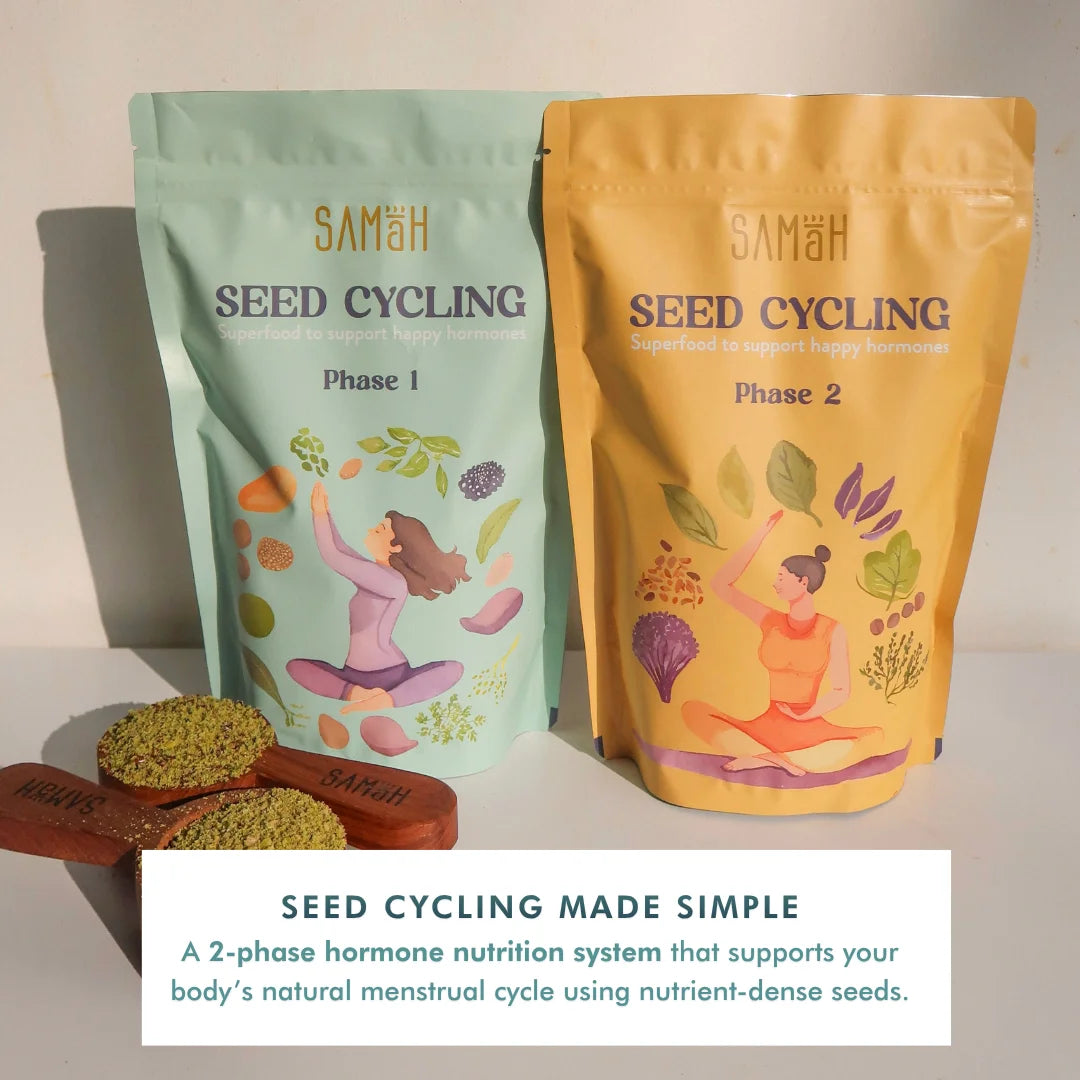
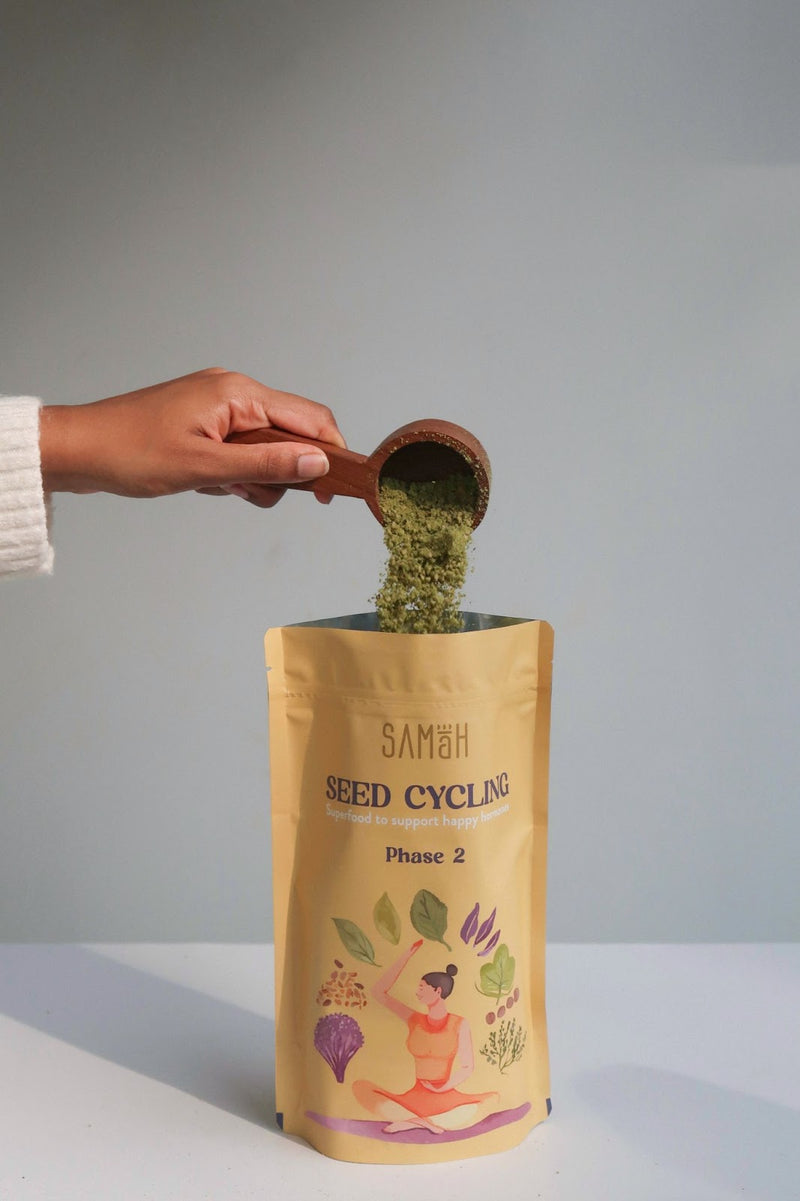
Seed Cycling Blend
One spoon a day, matched to the two halves of your cycle. Freshly ground seeds, in food form.

Cycle Syncing System
Four phase lattes, one for each part of your cycle. CALM is made for the second half.
What to expect
Seed cycling is simple. Sticking with it is the hard part. Here is a realistic, honest timeline of what most women experience.
-
WEEK 1–2
Building the habit
You're adding a new daily food ritual. Don't expect dramatic changes. Some women notice their digestion feels lighter from the fibre. You may notice nothing at all. That's normal.
-
MONTH 1
Settling in
Many women say their energy feels steadier and they feel lighter. You're getting zinc, selenium and good fats from consistent daily intake. Keep going.
-
MONTH 2
Finding your rhythm
Many women say the week before their period feels easier and their skin looks fresher. If you're tracking with the Sync app, you'll start to see your own pattern.
-
CYCLE 3+
Part of your routine
By month 3, the ritual is second nature. Many women describe this as 'my cycle just feels smoother and more predictable.'
-
Long term
A daily practice
Seed cycling is not a 30-day programme. It's a food-based daily practice. Many women continue seed cycling indefinitely because the seeds are genuinely nutritious foods.
Every body is different. Seed cycling is food, not medicine.
When to talk to your doctor
- If the week before your period regularly stops you from working, studying or living normally
- If your periods are very heavy, or you feel constantly exhausted
- If anything about your cycle changes suddenly or worries you
Doctors have tools food doesn't. Go, get answers. Good food works alongside medical care, not instead of it.

Start with your own pattern.
Sixty seconds. A few honest questions. We'll tell you where we'd start if we were you, and it might not even be a product.