How Long Does Seed Cycling Take to Show Results?
Most women who try seed cycling start to notice small changes within the first one to two cycles, which is roughly one to two months. The changes are usually around period comfort, like less cramping or less bloating, rather than anything dramatic. A fair trial is three full cycles. Seed cycling works gradually, and the most common reason people feel it has not worked is that they stopped too soon.
The quick answer
- Early changes, if they come, usually show up within one to two cycles.
- A proper trial is three full cycles, around three months.
- The first things people notice tend to be comfort related: easier periods, less bloating, steadier energy.
- Changes to cycle length or regularity, if they happen at all, take longer and are not guaranteed.
- Consistency matters more than perfection. Most days for three months beats a perfect routine you quit in week two.
Why seed cycling takes time
Seed cycling is a food habit, and food habits work slowly. This is not a flaw. It is how nutrition works.
Your menstrual cycle is not a switch. One full cycle is roughly a month, and your body prepares for each cycle during the one before it. So when you change what you eat, your body does not respond instantly. It responds over the course of the next cycle or two, as the new nutrients become part of your normal supply.
This is the opposite of how a painkiller works, and it is worth being honest about that difference. A painkiller acts in an hour because it is designed to. Seed cycling is not designed to act fast. It is designed to give your body a steady, useful supply of nutrients, cycle after cycle. The benefit, when it comes, is the result of that steadiness, not of any single dose.
So if you are one week in and feel no different, nothing has gone wrong. One week is simply too early to tell.
What to expect, month by month
No two women have the same experience, and some notice very little at all. But here is a realistic picture of how it tends to go.
In the first cycle, most people notice nothing, or notice something small near their period. Less bloating in the days before, or cramps that feel a little easier. One SAMĀH customer described exactly this after her first month: she could not point to any change in her cycle length, which had always been fairly regular, but that month her period was noticeably less painful with almost no bloating. That is a typical first-month report.
By the second and third cycle, the comfort changes, if they are going to happen, usually become clearer. Periods that feel smoother. Energy that dips less sharply in the second half of the cycle. The change is still gentle, but easier to point to.
Beyond three months is where some women notice their cycle itself feeling steadier or more predictable. This is the slowest change and the least guaranteed. If your cycles are irregular because of an underlying medical reason, food alone may not shift them, and that is a conversation for your doctor.
Why most people judge it too early
The single most common reason women feel seed cycling did not work is that they stopped before it had a fair chance.
It is easy to see why. Two or three weeks in, with nothing obvious to show for it, the habit feels pointless and quietly drops off. But two or three weeks is less than one full cycle. You have not actually tested seed cycling at that point. You have tested two weeks of it.
There is a second reason too. People expect the wrong kind of result. Seed cycling rarely produces a dramatic, obvious moment. It produces the sort of change you only see looking back — "my last two periods were easier than they used to be." If you are waiting for a single big before-and-after moment, you may miss the real, smaller change that actually happened.
So the honest advice is to decide upfront that you are giving it three full cycles, and to judge it only at the end of that. Not before.
How to give seed cycling a fair trial
A few things make the three-month trial actually work.
Make it easy. The harder a daily habit is, the sooner it gets dropped. Ground seeds, kept somewhere you will see them, added to something you already eat, like curd, a smoothie or oats. Friction is the enemy of consistency.
Be consistent, not perfect. Missing a day here and there changes nothing. Missing three weeks does. Aim for most days, and do not let one missed day turn into quitting.
Track lightly. You do not need an elaborate diary. Just note, each cycle, how your period felt compared to before. Memory is unreliable, and a few words written down will tell you far more at the three-month mark than trying to remember.
Keep the rest of your life in mind. Sleep, stress and your overall diet shape your hormones more than any single food. Seed cycling supports a good foundation. If you are sleeping four hours a night and highly stressed, that will matter more than the seeds, and it is worth being realistic about that.
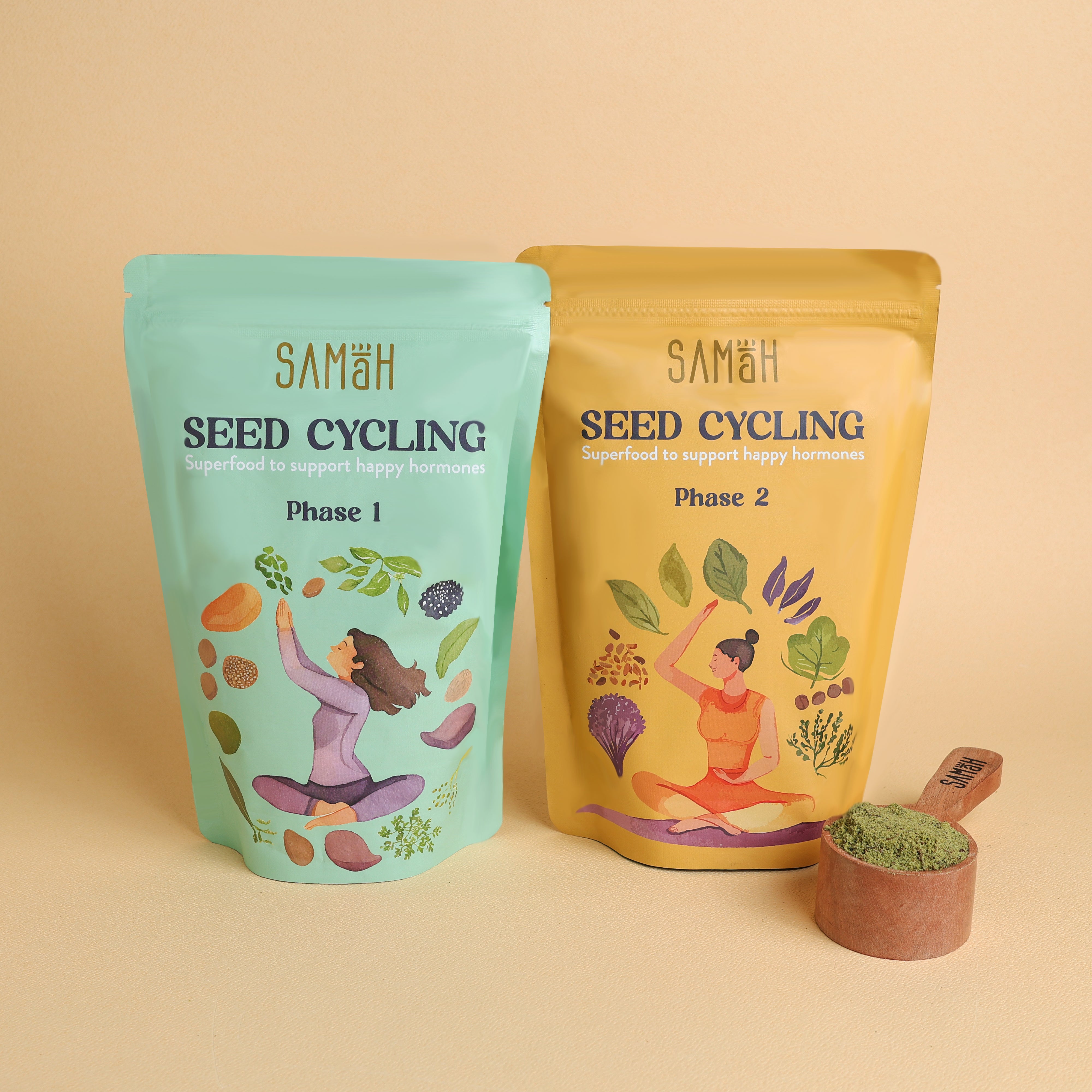
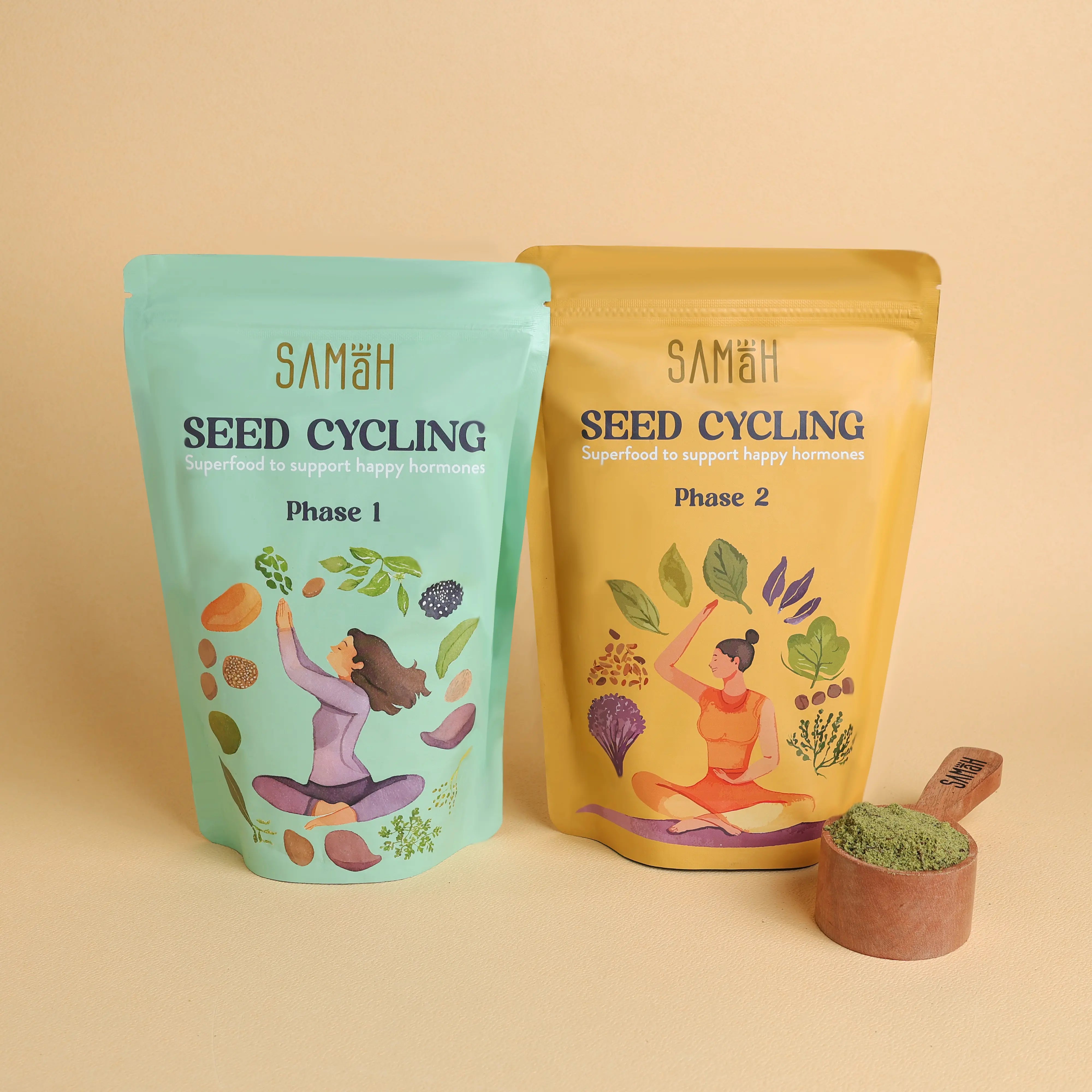
This is also the honest reason a pre-ground blend can help. SAMĀH's Seed Cycling Blends come ground and portioned by phase, which removes the two things that most often break the habit — grinding and measuring. The blend does not make seed cycling faster. It makes it easier to keep going long enough to give it a fair trial.
When to see a doctor
If your periods are consistently irregular, very heavy, very painful or absent, do not wait three months hoping seed cycling will fix it. Those are reasons to see a gynaecologist now. Seed cycling is a supportive food habit, not a treatment, and it should sit alongside medical care, not replace it.
Frequently asked questions
How long does seed cycling take to work?
Most women notice small changes within one to two cycles, around one to two months. A fair trial is three full cycles. The changes are usually gradual and comfort related rather than dramatic.
Should I see results in the first month?
Not necessarily. Many women notice nothing in the first cycle, or only a small change near their period. One month is often too early to judge seed cycling.
What if I see no results after three months?
If three consistent months bring no change, seed cycling may simply not be doing much for you, and that is okay. It is also a good point to speak to a doctor, especially if you have ongoing period concerns.
Does seed cycling work faster if I take more seeds?
No. Taking more than the recommended one to two tablespoons a day does not speed anything up and can cause digestive discomfort. Consistency over time matters far more than quantity.
Why do I feel no different after two weeks?
Two weeks is less than one full cycle, so it is too early to tell. Seed cycling works over the course of cycles, not days. Give it three full cycles before judging.
Do results from seed cycling last?
Seed cycling supports your body while you are doing it consistently. It is a habit, not a one-time fix, so the supportive effect depends on keeping it up rather than stopping after a few good months.