
You’re doing everything “right.” Eating less. Working out more. Cutting sugar. And still… the weight won’t budge, your energy crashes mid-day, and your cravings feel impossible to control.
If this sounds familiar, your PCOS diet might be missing something important.
PCOS isn’t just about weight or periods. It’s a hormonal condition. That means what you eat doesn’t just affect calories. It affects insulin, inflammation, and how your hormones function every single day. And that’s exactly why a proper PCOS diet matters more than any short-term fix.
Most women are told to “just eat less” or follow generic plans. But managing PCOS needs a different approach. It needs a diet for hormonal balance, not restriction.

A well-structured PCOS nutrition plan focuses on supporting your body, not fighting it. The goal isn’t to remove everything you love, but to add the right foods for PCOS that stabilise energy, reduce inflammation, and help your hormones work better.
Because once your body feels supported, everything changes. Your energy, your mood, and even your cycle.
And that’s where a true PCOS diet begins
What Is PCOS and Why Your Diet Matters
PCOS is more than a vague “cycle issue.” It’s a hormonal condition that changes how your body uses insulin, stores fat, and regulates energy. That’s why your PCOS diet plays a huge role in how you feel daily.
A strong PCOS nutrition plan focuses on supporting your hormones instead of restricting food. When you eat the right foods for PCOS, you’re helping your body stabilize energy, reduce inflammation, and move toward a better diet for hormonal balance.
What’s happening inside your body:
-
Insulin resistance → energy crashes + cravings
-
Hormonal imbalance → irregular cycles, mood swings
-
Inflammation → worsens symptoms over time
The Food-First Approach to PCOS
Instead of extreme diets, a smarter PCOS diet focuses on consistency and nourishment.

What to include daily:
-
Low-GI carbs → steady blood sugar [Example: Oats]
-
Lean protein → keeps you full longer [Example: Eggs]
-
Healthy fats → support hormone production [Example: Avocado]
-
Fiber-rich foods → improve insulin sensitivity [Example: Lentils]
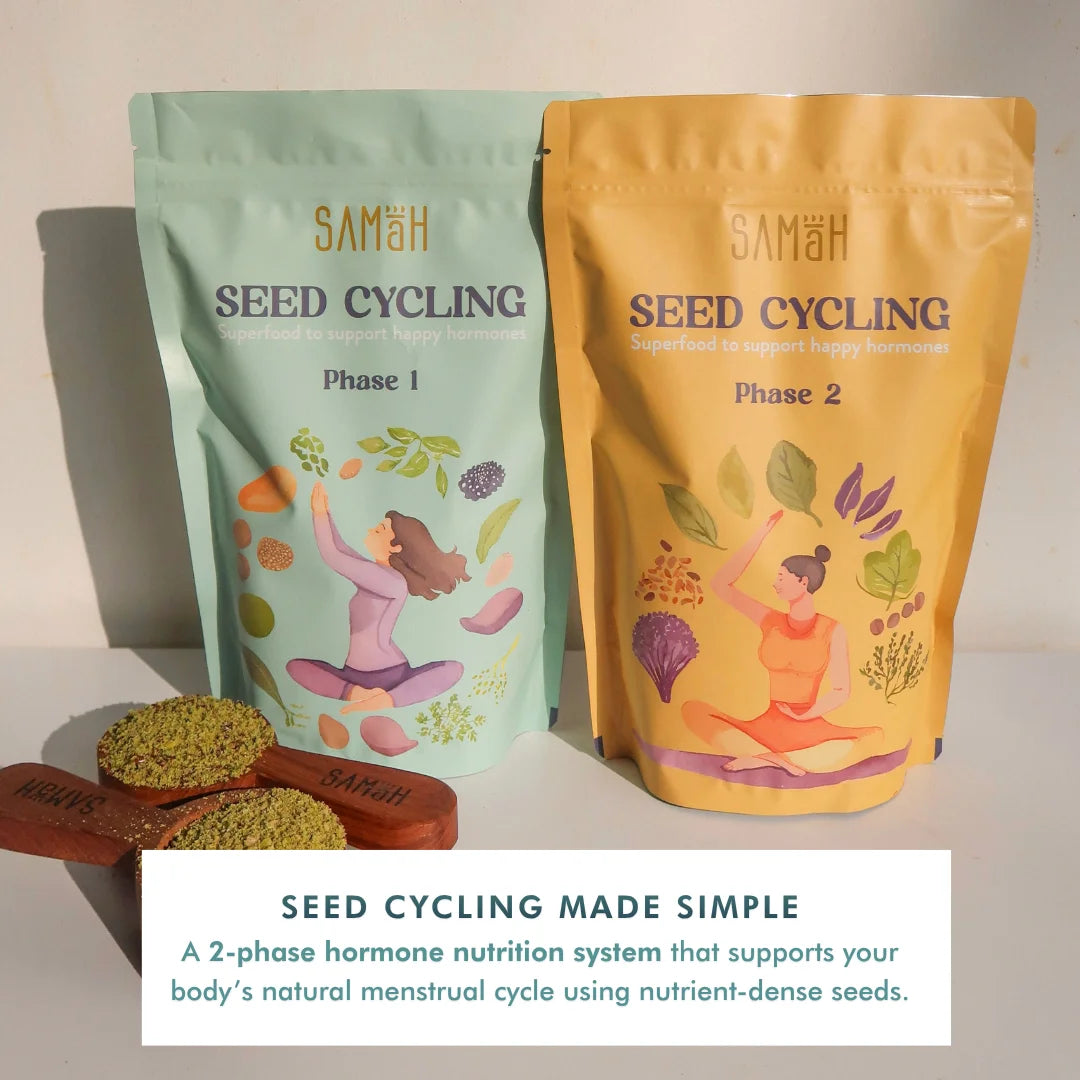
This is where tools like a seed cycling kit or cycle syncing kit can help.
-
They simplify your PCOS nutrition plan
-
Provide phase-based nutrients without guesswork
-
Support hormones naturally through food
Because the goal here is not perfection. You want to build a PCOS diet that your body can actually sustain.
Best Foods for PCOS (What to Actually Eat)

A strong PCOS diet is all about eating smarter. Here’s what your plate should focus on:
1. Fiber-Rich Foods (for insulin control)
-
Leafy greens (spinach, kale)
-
Vegetables (broccoli, carrots)
-
Whole grains (oats, brown rice)
→ Fiber helps slow digestion and reduce insulin spikes
2. Lean Proteins (for satiety and balance)
-
Chicken, fish, eggs
-
Tofu, lentils, chickpeas
→ Keeps you full and stabilizes energy levels
3. Healthy Fats (for hormone support)
-
Nuts and seeds
-
Avocado
-
Cold-pressed oils
→ Essential for hormone production and reducing inflammation
4. Low-GI Carbs (for steady energy)
-
Millets, quinoa
-
Whole fruits (not juices)
→ Helps avoid blood sugar spikes and crashes
Where Seed Cycling Fits In
This is where tools like a seed cycling kit naturally fit into your PCOS nutrition plan.
-
Flax + pumpkin seeds → support the first half of your cycle
-
Sesame + sunflower seeds → support the second half
This method helps support hormones through food, making your PCOS diet more structured and effective.
Foods to Limit (Without Feeling Restricted)
A good PCOS diet won’t require you to cut everything out. It’s about being aware of what might be making your symptoms worse and adjusting smartly.

Here’s what to limit, not eliminate:
1. Refined Sugar & High-GI Foods
-
Sugary drinks, desserts, white bread
-
Cause sharp spikes → crashes → more cravings
2. Ultra-Processed Foods
-
Packaged snacks, fried fast food
-
High in unhealthy fats + additives → increase inflammation
3. Excess Dairy (for some women)
-
Can worsen acne or bloating in sensitive individuals
-
Not necessary to remove, but worth observing
4. Skipping Meals
-
Leads to unstable blood sugar → energy dips
-
Makes your PCOS diet harder to sustain
What to Do Instead
Instead of restriction, shift your focus:
-
Pair carbs with protein or fat
-
Eat regularly to stabilise energy
-
Choose whole, real foods for PCOS
-
Build a consistent PCOS nutrition plan
Where Samāh Fits In (We Offer Simple Support)
If sticking to this daily feels overwhelming, structured tools help:
-
A cycle syncing kit supports your body across phases
-
A seed cycling kit adds targeted nutrients easily
Both help you stay consistent with your diet for hormonal balance

Cycle Syncing For PCOS: Can this be a game-changer?
This is where cycle syncing adds another layer of support. Instead of eating the same way every day, you begin aligning your nutrition with your hormonal shifts across the month. The result you get is- Better energy, fewer cravings, improved mood stability, and a more predictable cycle.

-
Supports hormonal balance naturally across phases
-
Reduces PMS symptoms like bloating, mood swings, and fatigue
-
Helps improve energy and focus when your body needs it most
-
Encourages better cycle awareness and consistency
Samāh’s Cycle Syncing blends are built exactly for this. Each phase-specific blend combines real, functional ingredients like flaxseeds, pumpkin seeds, sunflower seeds, and sesame seeds, along with herbs and superfoods designed to support your body through menstrual, follicular, ovulatory, and luteal phases.
REST (Menstrual): Beetroot, sweet potato, nettle, turmeric, amla, and ashwagandha support recovery, iron replenishment, and calm during low-energy days.
GLOW (Follicular): Turmeric, amla, ginger, lemon peel, maca, and hibiscus support detox, digestion, and rising energy as estrogen builds.
RADIANCE (Ovulatory): Butterfly pea, rose, lemon peel, amla, maca, and hibiscus support glow, confidence, circulation, and peak performance.
CALM (Luteal): Tulsi, chamomile, sweet potato, ashwagandha, nettle, and amla support stress balance, mood stability, and better sleep quality.
How to Build a Simple PCOS Routine (That Actually Sticks)
A good PCOS diet works best when it becomes part of your daily routine, not something you start and stop.
Instead of overthinking every meal, focus on small, repeatable habits.

A Simple Daily Structure (Made Practical)
Morning
-
Start with protein + healthy fats
-
Avoid sugary breakfasts
-
Add your cycle syncing blend (1 tsp in warm water/milk) based on your phase. This supports your hormones right from the start of the day.
Afternoon
-
Balanced meals (carbs + protein + fat)
-
Don’t skip meals → prevents cravings
-
Sprinkle your seed cycling blend (1–2 tbsp) into lunch, yoghurt, or smoothies for steady hormone support through the day
Evening
-
Lighter, nourishing meals
-
Focus on whole foods for PCOS
(If you’d like, you can take your cycle syncing blend as an evening drink instead of in the morning. It especially helpful in calming phases)
Why This Works Long-Term
-
Removes decision fatigue
-
Supports a steady diet for hormonal balance
-
Helps you stay consistent without restriction
-
Turns your PCOS diet into a lifestyle
What Actually Changes When You Fix Your PCOS Diet
When your PCOS diet starts working, you don’t just “feel healthier.” You notice very specific shifts in your body.

In the First Few Weeks
-
Cravings reduce (especially sugar at 3–5pm)
-
Energy becomes more stable through the day
-
You feel full faster and stay full longer
In 1–2 Months
-
Periods may become more regular
-
PMS symptoms start reducing
-
Bloating and water retention improve
Over Time
-
Weight becomes easier to manage
-
Skin and hair health improve
-
Your body starts responding instead of resisting
Why This Happens
-
Blood sugar stabilises → fewer insulin spikes
-
Hormones regulate → fewer extreme swings
-
Inflammation reduces → symptoms ease
Most people don’t struggle because their PCOS diet is wrong. They struggle because the approach isn’t sustainable. Expecting results in a week, being consistent for a few days and then stopping, or overcomplicating your routine. That’s where things break. PCOS doesn’t respond to extremes. It responds to what you do consistently.
What actually helps is keeping things simple enough to follow every day. Eat balanced meals, don’t skip food, and stop chasing perfection. A steady PCOS nutrition plan works way better than starting and stopping extreme diets every week. When you get this right, you’re quietly helping your body manage insulin, inflammation, and hormones in the background. And that’s where real change happens.
If you’re feeling like “okay but how do I actually stay consistent?”, you can always get help. Things like a seed cycling kit or a cycle syncing kit just take the thinking out of it because you’re still eating normal food, you’re just adding the right support at the right time. And that’s the shift. Not control. Not restriction. Just understanding your body a bit better and giving it what it needs, consistently. Over time, it starts working with you instead of against you.
Try Samāh today!